"Part of the reason why poverty still persists in our continent is governments inability to work in a bi-partisan manner with the opposition to confront the many problems facing us as a continent. In almost all the advanced democracies a government in power works or listens to the opposition in matters of national importance such as education, defence, energy and the economy. However in Africa such matters are always hijacked by the ruling government to the detriment of the nation and its people". Lord Aikins Adusei

LATEST:

Grab the widget  Tech Dreams

Friday, June 26, 2009

Is the International Criminal Court unfair to Africa?


Posted by: Barry Malone

African countries often complain about getting a bad press. They say there’s much more to the continent than war and poverty and starvation. Then there’s the huge coverage given to the International Criminal Court and the fact that all four cases the body is now considering come from Africa.

But what’s strange about the complaints is that the world’s poorest continent is the most heavily represented in the ICC, with 30 member countries. In the March 2009 elections for ICC judges, 12 out of the 19 candidates were Africans nominated by African governments. And Fatou Bensouda, the court’s Deputy Prosecutor, is from Gambia.

Of the four files before the court, the cases on Democractic Republic of Congo, Uganda and the Central African Republic were referred to the court by those very governments. The controversial fourth case, the indictment of Sudanese PresidentOmar Hassan al-Bashir for war crimes, was put before the court by the United Nations Security Council.

The ICC has issued an arrest warrant for the leader of the huge oil-exporting country to face charges of war crimes during almost six years of fighting in Sudan’s violent Darfur region — but he has refused to deal with the court.

It was that case, heavily opposed on the continent, that brought the 30 African ICC members together in Ethiopian capital Addis Ababa for an unprecedented meeting last week after calls from some countries that the Africans should withdraw en masse.

That didn’t happen and diplomats told me only Libya, Senegal, Djibouti and the Comoros islands had seriously lobbied the meeting for a total withdrawal. Reporters were kept well outside the conference room and security seemed tighter than usual but, even from a distance we could hear some very angry exchanges coming from inside. And the frustration written all over the faces of delegates as the meeting stretched into the night seemed to indicate there were serious disagreements on the issue.

But, in the end, they told us nothing and simply said they would make recommendations to their heads of state. Most African countries want the indictment against Bashir deferred for one year and the African Union says it will compromise peace efforts in Darfur. The 53-member organisation is also calling for a one-year deferral.

“The pursuit of peace can be deadly impacted upon if players, including a head of state, are denied even the fundamental presumption of innocence,” AU Peace and Security Commissioner Ramtane Lamara told delegates before the meeting began.

His boss, AU Commission Chairman Jean Ping, has repeatedly accused the ICC of having an unhealthy fixation on African leaders and says it should look elsewhere, too.

So is the African Union right? Is the ICC unfair to Africa and could the warrant for Bashir compromise peace efforts in Darfur? Or is the fact that every case before the court comes from Africa simply a true reflection of the continent’s problems?

Witnesses testify in albino trial in Burundi


Albino children in a school for the blind in Tanzania
Many people with albinism are living in fear in Burund

Witnesses have testified in the case of 11 men in Burundi, accused of the attempted murder of albino people and selling of their body parts.

Initial charges of murder have been dropped because the prosecution failed to produce enough evidence.

Police suspect the body parts are being sold in neighbouring Tanzania, for use in witchcraft.

Forty-six albino people have been murdered in Tanzania in the past 18 months, but no-one has been convicted.

But the violence against albinos is not restricted to Tanzania; last November a six-year-old albino girl in Burundi was found dead with her head and limbs removed.

'Desecrating graves'

Thursday's hearing in the eastern province of Ruyigi, near the Tanzanian border, has generated a great deal of interest.

Map

Witnesses travelled from the remote north-east of Burundi to give testimony linking one of the defendants with the killers of a married man with albinism whose body parts were allegedly taken to Tanzania.

The case began last week, but had to be adjourned after witnesses failed to show up.

The BBC's Prime Ndikumagenge says the courtroom is so crammed many people are waiting outside to hear details of the evidence second hand.

Our reporter says eight of the accused allegedly helped traffic albino body parts and desecrated a graveyard to take the parts of someone who was buried.

The rest of the defendants are accused of attempting to kill an albino child. The accused deny the charges.

Witchdoctors in the region are known to tell clients that potions made with albino body parts will bring them luck in love, life and business.

BBC East Africa correspondent Will Ross says Tanzania's government has promised action and the fact that there have been no reported attacks or murders of albinos for two months in Tanzania provides some hope.

Hundreds of people including witchdoctors and business people have been arrested but the justice system in Tanzania is notoriously slow and corrupt and so far nobody has been convicted, he says.

Albinism affects one in 20,000 people worldwide, but in Tanzania the prevalence appears to be much higher.

The Albino Association of Tanzania says that although just 4,000 albinos are officially registered in the country, they believe the actual number could be as high as 173,000. A census is now under way to try to verify the figures

Nigeria runs out of crude, refineries shut


  • From Madu Onuorah, Terhemba Daka (Abuja), Kelvin Ebiri (Port Harcourt), Willie Etim (Yenagoa), Taiwo Hassan and Blessing Eghagha (Lagos)

NOW the chicken has come to roost. The effects of the militancy in the Niger Delta and the Federal Government's clampdown on them have shaken the foundation of the oil and gas industry.

Yesterday, the government admitted that it had no more crude for its refineries to process for local consumption.

Consequently, the Warri and Port Harcourt refineries have been shut. The Kaduna Refinery, though functioning, has no crude to process because the Warri plant, which feeds it is shut due to a damage to major pipelines. The only stock, which was reserved, will be exhausted in the next 15 days, the Nigerian National Petroleum Corporation (NNPC) said yesterday.

The corporation's Group Managing Director (GMD), Mohammed Sanusi Barkindo, who painted the pathetic picture of the industry, said in the next 15 days, it will run out of crude for domestic consumption.

The corporation attributed the development to the crisis in the Niger Delta, which has escalated since the government scaled up a military offensive against the militants in the region.

In retaliation, the militants have intensified their sabotage of the activities of oil firms in the zone. In the last three weeks, the militants have struck four times, destroying facilities belonging to Shell, Chevron and Agip, which are joint venture partners with the government.

Apparently to keep his peace overtures to the militants on course, President Umaru Musa Yar'Adua yesterday ordered the immediate release of Asari-Dokubo, who was held in Lagos on Tuesday at the Murtala Muhammed International Airport, Lagos. The State Security Services (SSS), which detained Dokubo, promptly freed him. Asari-Dokubo yesterday in Lagos addressed a press conference, where he picked holes in amnesty being offered the militants by the President.

There were also speculations yesterday that the proposed amnesty would only last for 60 days, after which the government would close the door against recalcitrant armed men.

Barkindo raised the alarm on the depleting stock of crude during an interactive session with the House of Representatives Ad-hoc Committee on the Niger Delta crisis, chaired by Abdul Ningi.

Represented by his Assistant General Manager, Technical, Gabby Meheux, Barkindo said since the starting of the military operations in the region, there had been an escalation of militant activities targeting Shell, Chevron and Agip companies with attendant pipelines destruction.

He disclosed that as at last Friday, the average production output from its JVC stood at only 1.3 million barrels per day (bpd), adding that the Port Harcourt and the Warri refineries had both ran out of crude and were shut down as a result of the damages on the Nembe-Port Harcourt and Escravos-Chanomi pipelines.

According to him, the damage of the pipeline feeding Warri means no supplies to Kaduna refinery, hence the resort to the use of already stored crude, which is expected to run out in 15 days.

"Yes, what we currently have now will last for 15 days and after that it will finish. The consequence is that no refining would take place and no product would be available from Kaduna because the pipeline that would have supplied crude to Kaduna was vandalised and until it is repaired, we cannot pump crude," he explained.

Also, the Director, Chevron/NNPC Joint Venture, Supo Shadiya, said his company has incurred more losses than ever since the beginning of last May 13 military operations in the area.

He said there had been escalated attacks and sabotages on its facilities, adding that "since May 16 till date, we have lost one-third of our production capacity in West Africa and that is about 105, 000 bpd.

Shadiya said most of the pipelines exporting crude and gas from their off-shore to on-shore bases have been sabotaged, resulting to stoppage of crude transportation through them. He added that the firm's wells in MKB-5 and Apiteye-1 have been vandalised while fire had been raging in the latter since June 13 till date because the integrity of the well was affected.

"We have not been able to put off the fire because we cannot. The integrity of the well has been compromised and we don't have the facility to control it. So, we have brought in two well fire control specialists from abroad and they are still studying the fire to come up with a solution on how to put it off," he stated.

The representative of the Managing Director of Shell Petroleum Development Company (SPDC), Oriseh Agbarah, told the lawmakers that his company, which produces about 350, 000 bpd before the May military action now produces below 200, 000. "We are doing less than 30,000 from the whole of Delta region," he added.

The lawmakers took turns in blaming the NNPC for failing to collaborate with the National Emergency Management Agency (NEMA) on the provision of relief materials to the people in the crisis area.

Abdul Ningi particularly frowned at the non-commitment of NNPC and the multinationals to humanitarian issues in the area since the military operations started.

And as the nation awaits Yar'Adua's pronouncement on the amnesty package, the Movement for the Emancipation of the Niger Delta (MEND) has said its senior commanders, Farah Dagogo, Boyloaf and Soboma George did not participate in the talks with the Federal Government in Port Harcourt on Tuesday.

But the Presidential Committee on Peace and Conflict in the Niger Delta and the Niger Delta Technical Committee have expressed optimism that the President's address would address some of the core issues that necessitated militancy in the Niger Delta.

The Minister of Interior, Maj.-Gen. Godwin Abbe, the Inspector-General of Police, Mike Okiro, Assistant Inspector-General of Police for Zone 6, Joel Udah and the Rivers State Commissioner of Police, Bala Hassan, had on Tuesday met with lawyers allegedly representing MEND commanders, including the leader of the Niger Delta Vigilante, Ateke Tom, on the issue.

MEND spokesperson, Jomo Gbomo, said the group is waiting for what Yar'Adua has to offer in his expected address to the nation today before responding accordingly.

The Secretary of the Presidential Committee on Peace and Conflict, Kingsley Kuku, told The Guardian yesterday that the presidential address would pave way to lasting peace with the conditions that would be attached to the amnesty programme.

Kuku said the President is likely to mention some prominent names for amnesty, which should make the people of the region appreciate the attached goodwill.

Similarly, the Chairman of the Niger Delta Technical Committee, Ledum Mitee, told The Guardian that he expects Yar'Adua to come out with a holistic package that will not only address the issue of militancy and amnesty but also some of the fundamental issues that give excuse for militancy.

He said: "The Niger Delta problem forms the basis for arms struggle and so it has to be addressed. We must address the issue of proliferation of arms, re-integration without losing sight of the fact that we cannot create the impression that only those who have taken to arms can be rewarded. Justice is the issue."

Agency report had it yesterday that President Yar'Adua may propose a 60-day amnesty for the militants.

This move, according to a Presidency source, is aimed at enabling the government to work with those who are sincere about peace in the region.

"All militants, who respond positively to the amnesty proclamation should ... receive presidential pardon and thus become immune to criminal prosecution," the official said.

Asari-Dokubo has scoffed at the amnesty offer, saying "it is the people of Niger Delta that ought to offer amnesty to the Federal Government of Nigeria for years of occupation, environmental degradation" and other economic hardship that had brought "poverty to the entire Niger Delta."

At a press conference in Lagos immediately after he was released by the SSS, Asari-Dokubo said that the amnesty offer would only be accepted by those whose means of livelihood had been severely affected by the offensive of the Joint Task Force (JTF) in the Niger Delta.

"Those of us, who are committed to the genuine struggle for resource control, greater participation of our people in the oil industry, will never accept any form of amnesty from the Federal Republic of Nigeria. What we want is a Sovereign National Conference, a level-playing field. The fundamental issue to the "Ijaw nation in contemporary Nigeria is all about our sovereignty and nationhood," he said.

Ijaw Elders and Leaders Forum have also called on Yar'Adua to make public the supposed list of persons behind illegal bunkering in the region.

In a nine-point communique signed by elder statesman, Chief Edwin Clark and 11 others, the forum reiterated its earlier position that the continued presence of the military in the Niger Delta region serves more of their personal interests and a direct effect on the increased illegal bunkering activities.

The Ijaw leaders condemned the continued presence of the military "occupation" force in Ijaw land, particularly in the devastated Gbaramatu Kingdom and called for the immediate demilitarisation of the territory.

Who will get Bongo's cash?


  • Send feedback

PARIS, FRANCE - While the people of Gabon mourn the death of their Presidentand await his funeral, others are asking themselves what will happen to the criminal case brought against Omar Bongo in relation to alleged stolen assets, and a string of luxurious apartments, bank accounts and cars.

Last year Transparency International and the Sherpaassociation lodged a complaint against Omar Bongo and two other African leaders suspected of profiting from the proceeds of public assets.

The complaint led to a criminal investigation into Omar Bongo and his relatives, which established ownership of 39 apartments, 70 bank accounts and nine cars in France.

Bongo's death puts a halt to the criminal case, however.

“There is no longer any legal action possible against Omar Bongo, because criminal liability requires for the person to be alive,” says Maud Perdriel-VaissiĆ©re, a lawyer from the Sherpa association, which campaigns for social corporate responsibility.

Most of the apartments are located in the 16th district of Paris, which is a notoriously expensive area, home to a number of diplomatic embassies.

And his family and relatives are still likely to enjoy the benefits of the alleged stolen assets.Bongo’s son Ali-Ben, who is thought to be the most likely to succeed his father, bought a Ferrari worth almost 200,000 euros in 2001, but the charges Bongo faced will not threaten his family or relatives.

However, there is the possibly of another civil action against Bongo, which would recover the assets from those inheriting Bongo’s estate.

“Sherpa does not exclude the possibility of launching a civil case against him,” Perdriel-VaissiĆ©re told RFI. “Legal successors would have to pay for damages in that case,” she added.

“We are thinking about it, because it may be an option to explore, if we want to recover those stolen assets,” says Perdriel-VaissiĆ©re.

Bongo, who owned a mansion near the ElysĆ©e Palace thought to be worth 17 million euros, was involved in a number of scandals which tainted FranƧafrique – the close relationship France maintained with a number of its former colonies.

“Bongo was central to what’s known as the Elf affair,” says Nicolas Shaxson, author ofPoisoned Wells: The Dirty Politics of African Oil.

“He was offering services to French political parties and to the intelligence services, in effect he was offering his country and oil industry as a kind of off-shore platform where these parties and intelligence services could do their dirty business away from prying eyes,” says Shaxson, who is also an Associate Fellow at Chatham House.

Bongo was examined as part of a US Senate Committee investigation that looked into payments to a lobbyist for arranging a meeting with former US President George W. Bush.

When asked if the death of the Gabonese leader was convenient for Bongo’s relatives and the French state, Perdriel-VaissiĆ©re answered, “yes”.

Transparency International declined to comment and would not say whether they would be involved in another civil action against Bongo. In 2004 their Corruption Perceptions Index rated Gabon 3.3, A score of 10 is highly clean and 0 is highly corrupt

Will Ethiopia’s PM step down?

Posted by: Barry Malone


They say that the foundation of a good retirement is planning. By that measure, Ethi
opian Prime Minister Meles Zenawi should have his rest period well laid out. The rebel-turned-leader has been saying he wants to step aside for almost two years now.

But after 18 years at the helm of one of the world’s poorest countries the 54-year-old is still in power and says he is trapped by the wishes of his ruling party. They will discuss his desire to retire at an executive committee meeting next month and a September congress would give him the opportunity to ask the party for his twilight years.

Some analysts say his repeated hope for freedom - with the condition of party acceptance - is a ruse to make Meles appear more democratic than he is, while others say he feels he has taken the country as far as he can and covets a high-profile international position in the United Nations or the African Union.

The problem is that many in the ruling Ethiopian People’s Revolutionary Democratic Front (EPRDF) do not want to see their internationally recognisable leader go and may question his loyalty in an attempt to keep him in the driving seat as Ethiopia heads into an uncertain political and economic landscape ahead of its June 2010 national elections.

The father of two - who has a fascination with economics and represented Africa at the G20 summit - has presided over years of double-digit growth for the desperately poor country but has watched the global recession undo much of that progress.

And analysts and diplomats are divided on how next year’s elections will turn out.

A 2005 poll, touted as Ethiopia’s first truly democratic elections, ended in brutality when the government declared victory and the opposition said the result was fixed.

Police and soldiers then killed about 200 opposition protesters who had taken to the streets after Meles said they were attempting to topple the government.

Opposition leaders were jailed after Meles blamed them for orchestrating that violence and have made little impact since their release in a 2007 pardon deal. They say that is because of government harassment but the government denies that.

Ethiopians go to the polls again in June 2010 and analysts are divided on the question of whether the elections will pass off peacefully and without accusations of rigging.

And the straight-talking leader, hailed as a new hope for Africa when he overthrew a communist regime in 1991, has become a focus for rights groups who say he is cracking down on dissent again. One opposition leader has been jailed and 32 of former and serving military officers have been charged with plotting a coup.

The fact that the leader’s human rights record is questionable frustrates many Addis Ababa-based foreign diplomats who had admired Ethiopia’s economic developmentand poverty reduction schemes before the financial crisis started to unravel the good work.

With the opposition weakened it seems that a successor for Meles is likely to come from within his own party. EPRDF members have told me that Foreign Minister Seyoum Mesfin, Health Minister Tewodros Adhanom and Trade Minister Girma Birru are the most likely successors.

Should Meles step down, analysts and potential investors will closely watch his successor to see whether opposition parties are given more freedom or whether the EPRDF becomes more authoritarian so it can hold on to power beyond 20 years.

So does Meles really want to step down? Will his party let him? What will his legacy be? And what will become of Africa’s second most populous nation if he resigns?

(Photos: Prime Minister Meles Zenawi speaks to the media at his office in April, Reuters/Irada Humbatova (top); Ethiopian tour guide in Mequat Mariam, northern Ethiopia, Reuters/Barry Malone.

Zimbabwe concedes activist was abducted


Photo
1 of 1Full Size

By MacDonald Dzirutwe

HARARE (Reuters) - Zimbabwe state prosecutors on Thursday conceded security agents had abducted and illegally detained a leading rights activist who asked the Supreme Court to stop her prosecution on terrorism charges.

Jestina Mukoko, a prominent rights campaigner is seeking a permanent stay of her prosecution on charges of recruiting or trying to recruit people to overthrow the government. More than a dozen other opposition activists face similar charges.

The case has raised tensions in a new unity government formed by arch-foes President Robert Mugabe and Prime Minister Morgan Tsvangirai and is a test of the administration's commitment to democratic reforms demanded by Western donors.

Mukoko says she was seized at dawn in her night dress by unidentified armed men from her home on December 3 last year and tortured before being handed over to the police 19 days later.

Her lawyer Jeremy Gauntlet told a full bench of the Supreme Court on Thursday that Mukoko's rights had been grossly violated, including by being denied medication and a lawyer, and by being kept in solitary confinement.

"The process (of her arrest) is so contaminated that you should order a stay of prosecution," Gauntlet told the court, adding that prosecutors were solely relying on evidence extracted from Mukoko during torture to prosecute her.

The court reserved judgment on the matter indefinitely. If it rules in Mukoko's favour it would impact the other activists who have made the same application at the Supreme Court.

State prosecutor Fatima Maxwell, in response to a question from Chief Justice Godfrey Chidyausiku, said the state did not dispute Mukoko's evidence and had not questioned the security agents who had abducted her.

Asked if she was conceding that Mukoko's abduction and detention were illegal, Maxwell told the court: "Yes my Lord."

On whether Mukoko had been tortured, Maxwell added: "The allegations as they stand and if proved are a clear violation of the three rights in the constitution."

These are the right to liberty, protection at law and right from torture.

But Maxwell said the violations should not prevent Mukoko from being prosecuted but rather there should be a separate inquiry to investigate the allegations.

"We respectfully submit that yes the violations are serious, multiple and were protracted ... the only meaningful redress in this case is a stay of prosecution," Gauntlet said

Helicopter crashes off Kenya, one woman dead


NAIROBI (Reuters) - A small private helicopter crashed on Thursday in the Lamu archipelago off Kenya's Indian Ocean coast, killing one woman on board, police saidLamu police chief John Kamau said the chopper went down on Kiwayu island, killing the woman and seriously injuring her husband. They were both Kenyans of British origin.

Kamau had earlier said they were in a light plane, and were believed to be British.

Tail-winds destabilised the chopper as it was trying to land, causing it to hit a tree and burst into fire, he said.

"One of the occupants is confirmed dead," he told Reuters.

The Lamu archipelago is a favourite haunt for rich Kenyans and foreign tourists. Plenty of Westerners keep property there.

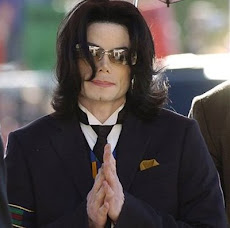
Michael Jackson dead: reports


Jackson suffered a cardiac arrest earlier today, according to CNN and entertainment news website TMZ.com.

TMZ is now reporting he has died.

"We've just learned Michael Jackson has died," TMZ said.

"Michael suffered a cardiac arrest earlier this afternoon and paramedics were unable to revive him.

"We're told when paramedics arrived Jackson had no pulse and they never got a pulse back," the entertainment website said.

There has been no official confirmation of the reported death and spokespersons for Jackson could not be reached for comment.

Earlier, The LA Times reported paramedics went to the singer's home and found him not breathing.

The newspaper said paramedics performed cardiopulmonary resuscitation at the scene before taking him to the UCLA Medical Centre hospital.

Jackson had been due to start a series of comeback concerts in London on July 13 running until March 2010.

He had been rehearsing in the Los Angeles area for the past two months.

The shows for the 50 London concerts sold out within hours of going on sale earlier this year.

Jackson started out as a child star in the band The Jackson 5 more than 40 years ago.

He has lived as a virtual recluse since his acquittal in 2005 on charges of child molestation.

There have been concerns about Jackson's health in recent years but the promoters of the London concerts, AEG Live, said in March that Jackson had passed a four-and-a-half hour physical examination with independent doctors.

- ABC/AFP/Reuters

Monday, June 22, 2009

Mbeki: West must honour pledges to Africa


Johannesburg - The developed world must honour its commitment to helping Africa weather the global economic crisis, former South African president Thabo Mbeki said on Thursday.

"Past experience confirms that in many instances it is much easier to make commitments to support the African development process than to honour such undertakings," Mbeki said in a speech prepared for delivery at the South African Property Owners Association convention in Durban.

"However, so grave is the current crisis, that Africa, and indeed the developed countries themselves, cannot afford such a betrayal of trust."


The G20 and various financial institutions had committed considerable resources to help Africa to weather the storm, he said.

Thus far, the crisis has had a considerable impact on the continent and on sub-Saharan Africa in particular.

"If anyone among us had any illusions about how the global crisis might affect us, these would surely have been shattered by the GDP figures for the first quarter of 2009 issued by Statistics SA last week," Mbeki said, referring to the announcement that South Africa had entered its first recession in 17 years.

The consequences include a decrease in demand for African exports, a drop in tourism, decreased remittances, a slump in foreign direct investment, a reduction of trade finance and a decrease in tax revenues as economies contracted.

Mbeki added that the financial turmoil also had social and political consequences in Africa including an increase in unemployment and poverty and the threat of social instability which might undermine democratic gains made in the last two decades.

The former president said sub-Saharan Africa needed to understand the problems posed by the crisis, respond to them and position itself to take advantage of the global economic recovery which would eventually take place.

"It follows that the rescue of the African economy must and will involve action by ourselves as Africans, and action by the developed countries," Mbeki said.

Mbeki said the International Monetary Fund and the World Bank had announced a number of interventions to help developing countries and Africa itself should takes steps to respond.

He argued this response should centre on pursuing the political, economic and security goals it set itself in the New Partnership for Africa's Development and on engaging G20 countries and multi-lateral institutions to honour the financial commitments made to them. - Sapa

Source Url: http://www.iol.co.za/index.php?art_id=nw20090604163919761C163706

Zimbabwe: Swazi King Hails Inclusive Govt


Harare - KING Mswati III of Swaziland has hailed the success and good work of the inclusive Government while reiterating previous calls for the immediate lifting of sanctions on Zimbabwe.

Speaking at a banquet held in his honour by President Mugabe at Rainbow Towers yesterday, King Mswati III said the region would continue to support the country.

He said he was confident Zimbabweans would continue to work together for the development of their country.

"I have come here to acknowledge and applaud the success and good work of the inclusive Government.

"We believe the Zimbabwean spirit of nationalism and unity shall continue amongst yourselves until Zimbabwe overcomes challenges.

"The people of Zimbabwe have clearly demonstrated to the whole world that you are capable of resolving your national challenges as a sovereign state."

The Swazi monarch jetted into the country yesterday afternoon on a three-day State visit after which he will attend the 13th Comesa Heads of State and Government Summit in Victoria Falls.

He said the region was doing all in its power to assist Zimbabwe and his government was considering a programme to determine how it could support the country.

"We are confident that the people of Zimbabwe, working together, will be able to resolve all the outstanding issues and thereby hasten the development and prosperity of the country.

"On our part as friends of Zimbabwe, we shall continue supporting this nation by, amongst other things, calling on all nations of the world to support this country and to end all sanctions so that the people of Zimbabwe can work without any obstacles."

President Mugabe hailed the king for the role he played in the resolution of Zimbabwe's political stand-off since he assumed the chairmanship of the Sadc Organ on Politics, Defence and Security in South Africa in August last year.

He also thanked Sadc for the support it had given to the inclusive Government.

"It was there (in South Africa) that Sadc took great strides in resolving sticky issues that were hindering agreement on the formation of the inclusive Government.

"Most recently, it was under Your Majesty's chairmanship that Sadc, at its Extraordinary Summit on 30 March, 2009, at Lozitha Royal Palace, received commitments from member states to assist Zimbabwe in its economic recovery efforts," President Mugabe said.

President Mugabe said it was gratifying that the inclusive Government had received significant support from the region with a number of Sadc members extending lines of credit and joint venture proposals.

Sadc has lobbied for the lifting of the illegal sanctions imposed on Zimbabwe by some Western governments.

"We are confident that the lifting of sanctions will give us the leverage in our endeavours to turn around the economy as articulated in the Short-Term Emergency Recovery Programme.

"I am also happy to note that Sadc efforts have already started to bear fruit.

"We have begun to witness overtures towards re-engagement from a number of Western countries and international financial institutions who, yesterday, were adopting a wait-and-see attitude on my Government," said President Mugabe.

He added that a number of Western countries had their unnecessary travel warnings removed, adding that he hoped this would boost the recovery of the tourism sector.

On co-operation between Zimbabwe and Swaziland, President Mugabe said the two countries could enhance ties in such key sectors as agriculture, manufacturing, mining and tourism, with a view to promoting bilateral trade and investment.

"Since our economies are complementary, there is merit in encouraging our respective local businesspeople to invest in both countries."

There was also scope for closer co-operation in the area of culture, given that the two countries shared several cultural and linguistic simi-

larities, the Zimbabwean leader noted.

President Mugabe said Zimbabwe remained committed to international peace and security, while calling on all United Nations members to uphold the principles and values of the world body's charter.

He said it was worth noting that Swaziland had played a pivotal role in the reform of the UN following African Union meetings that came up with the Ezulwini Consensus that lays down Africa's expectations on the reform of the organisation.

"We are aware of attempts to digress from this consensus by some member states. Zimbabwe will not allow itself to be distracted from this principled African decision."

President Mugabe said Zimbabwe fully subscribed to the spirit and ideals of a United States of Africa as envisaged by the continent's founding fathers when they established the Organisation of African Unity in 1963, and as enshrined in the Constitutive Act of the African Union.

Zimbabwe agreed with those advocating a gradual approach using the regional economic communities as the indicative building blocs for the eventual establishment of an African supra-national authority, he said.

On his arrival, King Mswati III received a rousing welcome at the Harare International Airport that included a 21-gun salute -- the highest honour that can be bestowed on a visiting head of state.

The Swazi monarch also inspected the guard of honour.

He was welcomed by President Mugabe, First Lady Amai Grace Mugabe, Vice President Joice Mujuru, Defence Minister Emmerson Mnangagwa, Information and Publicity Minister Webster Shamu, and other senior Government officials, service chiefs and diplomats.

Accompanying King Mswati III were Chief Officer of the Kingdom Mr Bheki Dlamini, Swaziland's Foreign Affairs Minister Mr Lutto Dlamini, as well as the monarch's wife, children and relatives.

King Mswati III will visit Norton today before travelling to Bulawayo.

After that he will join his fellow Heads of State and Government in Victoria Falls for the 13th Comesa Summit.

Original Source: The Herald (Harare)

Africa Watch Updates

R.I.P.

R.I.P.

AfriGator

AfrigatorAfrigator